Project Overview
This project explores how accessibility-first design can significantly improve user experience in smart parking systems for individuals with dyslexia. Many existing parking and navigation systems rely heavily on dense text, complex layouts, and time-critical decisions, creating unnecessary stress for neurodiverse users.
The solution focuses on reducing cognitive load and improving navigation confidence through intuitive, inclusive, and human-centred interface design.
Project Results & Visual Output
Below are examples of visual outputs and interface designs demonstrating the accessibility-focused solutions for dyslexic users, including parking guidance visuals, dyslexia-friendly typography, and auditory feedback integrations.
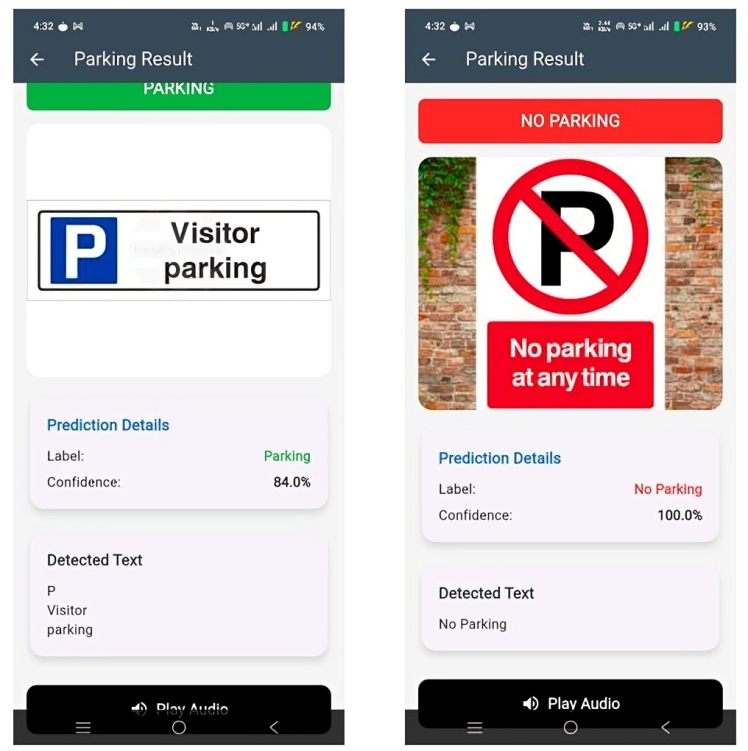
Smart Parking Guide for Dyslexic Users Mobile Application.
Project Goal
To design an intuitive and inclusive parking guidance system that reduces cognitive load and improves navigation confidence for dyslexic users in smart-city environments.
Key Features & Achievements
- Applied dyslexia-friendly typography and colour contrast principles
- Reduced text dependency using visual cues and intuitive symbols
- Structured information into clear, step-by-step guidance flows
- Designed layouts to minimise distractions and confusion
- Aligned the solution with smart-city infrastructure requirements
Technologies Used
AI / ML
- Deep Learning
- Computer Vision
- Real-Time Inference
Models
- YOLOv8 (Object Detection)
- MobileNetV3
- EfficientNetV2
- ShuffleNetV2
Computer Vision & OCR
- Image Classification
- Visual Feature Extraction
- Tesseract OCR
- Google Vision API
Speech, UX & Deployment
- Text-to-Speech (TTS)
- Dyslexia-Friendly Interface Design
- Mobile & Cloud-Assisted AI Pipeline
- User Studies & Model Benchmarking
Use Cases
- Smart parking systems
- Public transport hubs and airports
- Smart-city digital infrastructure
- Accessibility-focused public services
What This Project Demonstrates
This project demonstrates the ability to design real-world digital solutions that prioritise accessibility, inclusivity, and user experience alongside advanced AI technologies.